Buy junba.net ?
We are moving the project
junba.net .
Are you interested in purchasing the domain
junba.net ?
domain@kv-gmbh.de · 0541-91531010
Buy junba.net ?
What are polygons?
Polygons are two-dimensional shapes that are made up of straight lines and enclosed by a set of vertices. They can have any number of sides, but must have at least three. Common examples of polygons include triangles, squares, rectangles, pentagons, hexagons, and octagons. Polygons are used in various mathematical and geometric applications, and are fundamental to understanding the properties of shapes and their relationships. **
What are triangles and polygons?
Triangles are three-sided polygons, while polygons are closed shapes with straight sides. Triangles are a specific type of polygon with three sides and three angles. Polygons can have any number of sides, as long as they are straight and the shape is closed. Both triangles and polygons are fundamental shapes in geometry and are used to study the properties of angles, sides, and area. **

Similar search terms for Polygons
Top-Angebote
Products related to Polygons:
-
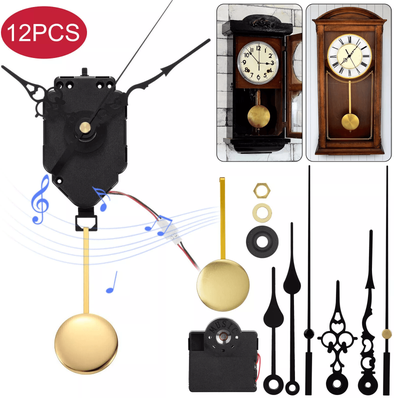
Drop Dash Deals DIY Pendulum Clock Mechanism, Replacement Movement Set With Music, Chime Box, And Clock Hands DIY Pendulum Clock Mechanism, Replacement Movement Set With Music, Chime Box, And Clock HandsElegant DIY Clock Movement Set: Enhance your home decor with this Replacement Wall Clock Movement Kit. It includes everything you need to create your own clock, including two pairs of clock hands, a chime box, and a pendulum. Perfect for those who...43,97 $*Shipping: 0,00 $Secure redirect to the provider
-
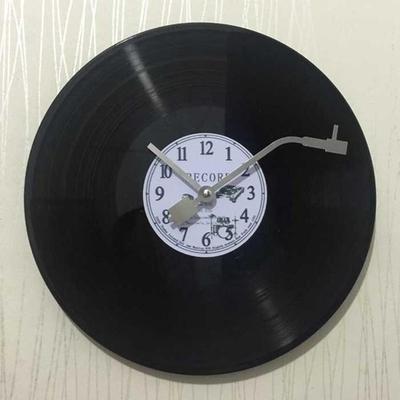
Everyday Crate Vintage Vinyl Record Wall Clock With Silent Movement Retro Music Decor blue NumbersWake up your walls with a piece of music history that tells more than just time. This vinyl record wall clock transforms authentic retro records into eyecatching dcor, making it perfect for music enthusiasts, collectors, and anyone who loves...49,97 $*Shipping: 0,00 $Secure redirect to the provider
-
Uplift Essentials Coffee Culture Series Modern Espresso & Latte Canvas Art cortado 16 X 20 InCelebrate the art of the brew with our Coffee Culture Poster Series. This collection captures the sophisticated world of specialty coffeefrom the bold layers of an Espresso to the velvety texture of a Cortado. Featuring a blend of modern typography...88,97 $*Shipping: 0,00 $Secure redirect to the provider
-
Everyday Crate Vintage Vinyl Record Wall Clock With Silent Movement Retro Music Decor white NumbersWake up your walls with a piece of music history that tells more than just time. This vinyl record wall clock transforms authentic retro records into eyecatching dcor, making it perfect for music enthusiasts, collectors, and anyone who loves...49,97 $*Shipping: 0,00 $Secure redirect to the provider



-
How can I reduce further polygons?
To reduce further polygons, you can try simplifying the geometry by removing unnecessary vertices or edges. This can be done by using tools like the simplify function in modeling software or manually editing the mesh to remove unnecessary details. Additionally, you can try using techniques like retopology to create a cleaner and more optimized mesh with fewer polygons. Finally, consider using LOD (Level of Detail) techniques to dynamically adjust the level of detail based on the distance of the object from the camera, reducing the number of polygons rendered at a given time. **
-
How can I further reduce polygons?
You can further reduce polygons by using tools such as the "Decimate" modifier in 3D modeling software, which allows you to reduce the number of polygons while preserving the overall shape of the model. Additionally, you can manually optimize the topology of the model by merging vertices, removing unnecessary edge loops, and simplifying complex geometry. Another approach is to use automated retopology tools to create a lower-polygon version of the model while maintaining its overall structure and details. **
-
How do you calculate regular polygons?
To calculate the area of a regular polygon, you can use the formula: Area = (1/2) * apothem * perimeter, where the apothem is the distance from the center of the polygon to the midpoint of any side, and the perimeter is the total length of all the sides. To calculate the interior angle of a regular polygon, you can use the formula: Interior angle = (180 * (n - 2)) / n, where n is the number of sides. Finally, to calculate the exterior angle of a regular polygon, you can use the formula: Exterior angle = 360 / n, where n is the number of sides. **
-
What are polygons in video games?
Polygons in video games are the building blocks of 3D graphics. They are flat, two-dimensional shapes that are used to create the surfaces of 3D objects in the game world. These polygons are connected to form the overall shape of the object, and then textures and lighting are applied to give them a more realistic appearance. The more polygons used, the more detailed and complex the 3D models can be, but this also requires more processing power from the computer or gaming console. **


Does a subdivision surface create more polygons?
Yes, a subdivision surface does create more polygons. When a subdivision surface is applied to a model, it increases the number of polygons by subdividing the existing geometry and creating a smoother surface. This can result in a higher level of detail and a more organic shape, but it also increases the complexity of the model and can impact performance in some cases. **
How do you calculate polygons in math?
To calculate the area of a polygon in math, you can use the formula A = 1/2 * base * height for a triangle, A = length * width for a rectangle, or A = 1/2 * apothem * perimeter for a regular polygon. For irregular polygons, you can divide the shape into smaller, simpler shapes and calculate their individual areas, then sum them up to find the total area of the polygon. Additionally, you can use trigonometric functions to calculate the area of a polygon with known side lengths and angles. **
Top-Angebote
Products related to Polygons:
-
DynamicDeals Quartz Clock Movement Mechanism With Chime Music Box, DIY Replacement Repair Parts Kit, Pendulum Clock Movement For Wall Quartz Clock Movement Mechanism With Chime Music Box, DIY Replacement Repair Parts Kit, Pendulum Clock Movement For WallUpgrade and restore your favorite timepieces with our Quartz Clock Movement Mechanism featuring a Chime Music Box and DIY Replacement Repair Parts Kit. Designed for hobbyists, crafters, and clock repair professionals, this kit includes everything...41,97 $*Shipping: 0,00 $Secure redirect to the provider
-
Drop Dash Deals Pendulum Clock Movement Kit Chime Music Box Mechanism DIY Repair Parts For Wall Clocks Pendulum Clock Movement Kit Chime Music Box Mechanism DIY Repair Parts For Wall ClocksBring your cherished clock back to life with this 12pcs pendulum clock movement kit, designed for those who love DIY clock repair. Whether you're a hobbyist or just looking to restore a treasured timepiece, this kit offers everything you need,...49,97 $*Shipping: 0,00 $Secure redirect to the provider
-
Drop Dash Deals DIY Pendulum Clock Mechanism, Replacement Movement Set With Music, Chime Box, And Clock Hands DIY Pendulum Clock Mechanism, Replacement Movement Set With Music, Chime Box, And Clock HandsElegant DIY Clock Movement Set: Enhance your home decor with this Replacement Wall Clock Movement Kit. It includes everything you need to create your own clock, including two pairs of clock hands, a chime box, and a pendulum. Perfect for those who...43,97 $*Shipping: 0,00 $Secure redirect to the provider
-
Everyday Crate Vintage Vinyl Record Wall Clock With Silent Movement Retro Music Decor blue NumbersWake up your walls with a piece of music history that tells more than just time. This vinyl record wall clock transforms authentic retro records into eyecatching dcor, making it perfect for music enthusiasts, collectors, and anyone who loves...49,97 $*Shipping: 0,00 $Secure redirect to the provider
-
What are polygons?
Polygons are two-dimensional shapes that are made up of straight lines and enclosed by a set of vertices. They can have any number of sides, but must have at least three. Common examples of polygons include triangles, squares, rectangles, pentagons, hexagons, and octagons. Polygons are used in various mathematical and geometric applications, and are fundamental to understanding the properties of shapes and their relationships. **
-
What are triangles and polygons?
Triangles are three-sided polygons, while polygons are closed shapes with straight sides. Triangles are a specific type of polygon with three sides and three angles. Polygons can have any number of sides, as long as they are straight and the shape is closed. Both triangles and polygons are fundamental shapes in geometry and are used to study the properties of angles, sides, and area. **
-
How can I reduce further polygons?
To reduce further polygons, you can try simplifying the geometry by removing unnecessary vertices or edges. This can be done by using tools like the simplify function in modeling software or manually editing the mesh to remove unnecessary details. Additionally, you can try using techniques like retopology to create a cleaner and more optimized mesh with fewer polygons. Finally, consider using LOD (Level of Detail) techniques to dynamically adjust the level of detail based on the distance of the object from the camera, reducing the number of polygons rendered at a given time. **
-
How can I further reduce polygons?
You can further reduce polygons by using tools such as the "Decimate" modifier in 3D modeling software, which allows you to reduce the number of polygons while preserving the overall shape of the model. Additionally, you can manually optimize the topology of the model by merging vertices, removing unnecessary edge loops, and simplifying complex geometry. Another approach is to use automated retopology tools to create a lower-polygon version of the model while maintaining its overall structure and details. **
Similar search terms for Polygons
-
Uplift Essentials Coffee Culture Series Modern Espresso & Latte Canvas Art cortado 16 X 20 InCelebrate the art of the brew with our Coffee Culture Poster Series. This collection captures the sophisticated world of specialty coffeefrom the bold layers of an Espresso to the velvety texture of a Cortado. Featuring a blend of modern typography...88,97 $*Shipping: 0,00 $Secure redirect to the provider
-
Everyday Crate Vintage Vinyl Record Wall Clock With Silent Movement Retro Music Decor white NumbersWake up your walls with a piece of music history that tells more than just time. This vinyl record wall clock transforms authentic retro records into eyecatching dcor, making it perfect for music enthusiasts, collectors, and anyone who loves...49,97 $*Shipping: 0,00 $Secure redirect to the provider
-
Uplift Essentials Coffee Culture Series Modern Espresso & Latte Canvas Art cortado 24 X 35 InCelebrate the art of the brew with our Coffee Culture Poster Series. This collection captures the sophisticated world of specialty coffeefrom the bold layers of an Espresso to the velvety texture of a Cortado. Featuring a blend of modern typography...131,97 $*Shipping: 0,00 $Secure redirect to the provider
-
Uplift Essentials Coffee Culture Series Modern Espresso & Latte Canvas Art espresso 12 X 16 InCelebrate the art of the brew with our Coffee Culture Poster Series. This collection captures the sophisticated world of specialty coffeefrom the bold layers of an Espresso to the velvety texture of a Cortado. Featuring a blend of modern typography...83,99 $*Shipping: 0,00 $Secure redirect to the provider
-
How do you calculate regular polygons?
To calculate the area of a regular polygon, you can use the formula: Area = (1/2) * apothem * perimeter, where the apothem is the distance from the center of the polygon to the midpoint of any side, and the perimeter is the total length of all the sides. To calculate the interior angle of a regular polygon, you can use the formula: Interior angle = (180 * (n - 2)) / n, where n is the number of sides. Finally, to calculate the exterior angle of a regular polygon, you can use the formula: Exterior angle = 360 / n, where n is the number of sides. **
-
What are polygons in video games?
Polygons in video games are the building blocks of 3D graphics. They are flat, two-dimensional shapes that are used to create the surfaces of 3D objects in the game world. These polygons are connected to form the overall shape of the object, and then textures and lighting are applied to give them a more realistic appearance. The more polygons used, the more detailed and complex the 3D models can be, but this also requires more processing power from the computer or gaming console. **
-
Does a subdivision surface create more polygons?
Yes, a subdivision surface does create more polygons. When a subdivision surface is applied to a model, it increases the number of polygons by subdividing the existing geometry and creating a smoother surface. This can result in a higher level of detail and a more organic shape, but it also increases the complexity of the model and can impact performance in some cases. **
-
How do you calculate polygons in math?
To calculate the area of a polygon in math, you can use the formula A = 1/2 * base * height for a triangle, A = length * width for a rectangle, or A = 1/2 * apothem * perimeter for a regular polygon. For irregular polygons, you can divide the shape into smaller, simpler shapes and calculate their individual areas, then sum them up to find the total area of the polygon. Additionally, you can use trigonometric functions to calculate the area of a polygon with known side lengths and angles. **
* All prices are inclusive of VAT and, if applicable, plus shipping costs. The offer information is based on the details provided by the respective shop and is updated through automated processes. Real-time updates do not occur, so deviations can occur in individual cases. ** Note: Parts of this content were created by AI.