Buy junba.net ?
We are moving the project
junba.net .
Are you interested in purchasing the domain
junba.net ?
domain@kv-gmbh.de · 0541-91531010
Buy junba.net ?
When do you conjugate "avoir"?
The verb "avoir" is conjugated when talking about possession or to form compound tenses such as the passé composé. In these cases, "avoir" is conjugated according to the subject of the sentence. For example, "J'ai un chat" (I have a cat) or "Nous avons mangé" (We have eaten). **
How do you conjugate falloir?
The verb "falloir" is an impersonal verb, meaning it is only used in the third person singular. It is conjugated as "il faut" in the present tense, "il fallait" in the imperfect tense, and "il faudra" in the future tense. There is no need to conjugate it for different subjects, as it always remains in the third person singular form. **

Similar search terms for Conjugate
Top-Angebote
Products related to Conjugate:
-
Uplift Essentials Coffee Culture Series Modern Espresso & Latte Canvas Art espresso 16 X 20 InCelebrate the art of the brew with our Coffee Culture Poster Series. This collection captures the sophisticated world of specialty coffeefrom the bold layers of an Espresso to the velvety texture of a Cortado. Featuring a blend of modern typography...88,97 $*Shipping: 0,00 $Secure redirect to the provider
-
Uplift Essentials Coffee Culture Series Modern Espresso & Latte Canvas Art cortado 8 X 10 InCelebrate the art of the brew with our Coffee Culture Poster Series. This collection captures the sophisticated world of specialty coffeefrom the bold layers of an Espresso to the velvety texture of a Cortado. Featuring a blend of modern typography...60,97 $*Shipping: 0,00 $Secure redirect to the provider
-
Uplift Essentials Coffee Culture Series Modern Espresso & Latte Canvas Art cafe Latte 24 X 31 InCelebrate the art of the brew with our Coffee Culture Poster Series. This collection captures the sophisticated world of specialty coffeefrom the bold layers of an Espresso to the velvety texture of a Cortado. Featuring a blend of modern typography...121,97 $*Shipping: 0,00 $Secure redirect to the provider
-
Uplift Essentials Coffee Culture Series Modern Espresso & Latte Canvas Art cafe Latte 24 X 35 InCelebrate the art of the brew with our Coffee Culture Poster Series. This collection captures the sophisticated world of specialty coffeefrom the bold layers of an Espresso to the velvety texture of a Cortado. Featuring a blend of modern typography...131,97 $*Shipping: 0,00 $Secure redirect to the provider


-
How do you conjugate French adjectives?
In French, adjectives must agree in gender (masculine or feminine) and number (singular or plural) with the noun they modify. To conjugate a French adjective, you need to add the appropriate ending to match the gender and number of the noun it describes. For example, to make the adjective "petit" (small) agree with a masculine singular noun, you would use "petit." But if the noun is feminine singular, you would use "petite." And for a masculine plural noun, you would use "petits," and for a feminine plural noun, you would use "petites." **
-
How do you conjugate in Hebrew?
In Hebrew, verbs are conjugated based on the subject of the sentence and the tense of the action. There are different conjugation patterns for each tense (past, present, future) and for each subject (I, you, he/she/it, we, you all, they). The verb root remains the same, but the conjugation changes to match the subject and tense. Additionally, Hebrew verbs also change based on gender and number of the subject. Learning the conjugation patterns and practicing with different verbs is essential for mastering Hebrew verb conjugation. **
-
Can you help me conjugate avoir?
Sure! The verb "avoir" is conjugated as follows: - J'ai (I have) - Tu as (You have) - Il/Elle/On a (He/She/One has) - Nous avons (We have) - Vous avez (You have) - Ils/Elles ont (They have) **
-
How do you conjugate in French?
In French, verbs are conjugated to match the subject of the sentence, including the person (I, you, he/she, we, they) and the tense (present, past, future, etc.). To conjugate a regular verb in the present tense, you remove the infinitive ending (-er, -ir, -re) and add the appropriate ending for the subject (je, tu, il/elle, nous, vous, ils/elles). For example, for the verb "parler" (to speak), you would conjugate it as "je parle" (I speak), "tu parles" (you speak), "il/elle parle" (he/she speaks), "nous parlons" (we speak), "vous parlez" (you speak), "ils/elles parlent" (they speak). Irregular verbs have their own unique conjugation patterns that need to be memorized. **


How do you conjugate "perire" in Latin?
The verb "perire" in Latin is conjugated as follows in the present tense: - I perish: pereo - You perish: peris - He/she/it perishes: perit - We perish: perimus - You (plural) perish: peritis - They perish: pereunt **
How do you conjugate the Passé Composé?
To conjugate the Passé Composé in French, you typically use the auxiliary verb "avoir" or "être" followed by the past participle of the main verb. The choice between "avoir" and "être" depends on the verb being used and whether it is a transitive or intransitive verb. The past participle of regular -er verbs is formed by replacing the -er ending with -é, for -ir verbs you replace the -ir ending with -i, and for -re verbs you replace the -re ending with -u. Irregular verbs have unique past participle forms that need to be memorized. **
Top-Angebote
Products related to Conjugate:
-
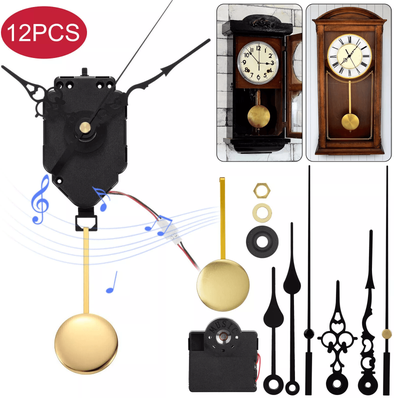
DynamicDeals Quartz Clock Movement Mechanism With Chime Music Box, DIY Replacement Repair Parts Kit, Pendulum Clock Movement For Wall Quartz Clock Movement Mechanism With Chime Music Box, DIY Replacement Repair Parts Kit, Pendulum Clock Movement For WallUpgrade and restore your favorite timepieces with our Quartz Clock Movement Mechanism featuring a Chime Music Box and DIY Replacement Repair Parts Kit. Designed for hobbyists, crafters, and clock repair professionals, this kit includes everything...41,97 $*Shipping: 0,00 $Secure redirect to the provider
-
Uplift Essentials Coffee Culture Series Modern Espresso & Latte Canvas Art cortado 20 X 28 InCelebrate the art of the brew with our Coffee Culture Poster Series. This collection captures the sophisticated world of specialty coffeefrom the bold layers of an Espresso to the velvety texture of a Cortado. Featuring a blend of modern typography...109,97 $*Shipping: 0,00 $Secure redirect to the provider
-
Uplift Essentials Coffee Culture Series Modern Espresso & Latte Canvas Art espresso 16 X 20 InCelebrate the art of the brew with our Coffee Culture Poster Series. This collection captures the sophisticated world of specialty coffeefrom the bold layers of an Espresso to the velvety texture of a Cortado. Featuring a blend of modern typography...88,97 $*Shipping: 0,00 $Secure redirect to the provider
-
Uplift Essentials Coffee Culture Series Modern Espresso & Latte Canvas Art cortado 8 X 10 InCelebrate the art of the brew with our Coffee Culture Poster Series. This collection captures the sophisticated world of specialty coffeefrom the bold layers of an Espresso to the velvety texture of a Cortado. Featuring a blend of modern typography...60,97 $*Shipping: 0,00 $Secure redirect to the provider
-
When do you conjugate "avoir"?
The verb "avoir" is conjugated when talking about possession or to form compound tenses such as the passé composé. In these cases, "avoir" is conjugated according to the subject of the sentence. For example, "J'ai un chat" (I have a cat) or "Nous avons mangé" (We have eaten). **
-
How do you conjugate falloir?
The verb "falloir" is an impersonal verb, meaning it is only used in the third person singular. It is conjugated as "il faut" in the present tense, "il fallait" in the imperfect tense, and "il faudra" in the future tense. There is no need to conjugate it for different subjects, as it always remains in the third person singular form. **
-
How do you conjugate French adjectives?
In French, adjectives must agree in gender (masculine or feminine) and number (singular or plural) with the noun they modify. To conjugate a French adjective, you need to add the appropriate ending to match the gender and number of the noun it describes. For example, to make the adjective "petit" (small) agree with a masculine singular noun, you would use "petit." But if the noun is feminine singular, you would use "petite." And for a masculine plural noun, you would use "petits," and for a feminine plural noun, you would use "petites." **
-
How do you conjugate in Hebrew?
In Hebrew, verbs are conjugated based on the subject of the sentence and the tense of the action. There are different conjugation patterns for each tense (past, present, future) and for each subject (I, you, he/she/it, we, you all, they). The verb root remains the same, but the conjugation changes to match the subject and tense. Additionally, Hebrew verbs also change based on gender and number of the subject. Learning the conjugation patterns and practicing with different verbs is essential for mastering Hebrew verb conjugation. **
Similar search terms for Conjugate
-
Uplift Essentials Coffee Culture Series Modern Espresso & Latte Canvas Art cafe Latte 24 X 31 InCelebrate the art of the brew with our Coffee Culture Poster Series. This collection captures the sophisticated world of specialty coffeefrom the bold layers of an Espresso to the velvety texture of a Cortado. Featuring a blend of modern typography...121,97 $*Shipping: 0,00 $Secure redirect to the provider
-
Uplift Essentials Coffee Culture Series Modern Espresso & Latte Canvas Art cafe Latte 24 X 35 InCelebrate the art of the brew with our Coffee Culture Poster Series. This collection captures the sophisticated world of specialty coffeefrom the bold layers of an Espresso to the velvety texture of a Cortado. Featuring a blend of modern typography...131,97 $*Shipping: 0,00 $Secure redirect to the provider
-
Uplift Essentials Coffee Culture Series Modern Espresso & Latte Canvas Art espresso 17 X 24 In (a2)Celebrate the art of the brew with our Coffee Culture Poster Series. This collection captures the sophisticated world of specialty coffeefrom the bold layers of an Espresso to the velvety texture of a Cortado. Featuring a blend of modern typography...94,97 $*Shipping: 0,00 $Secure redirect to the provider
-
Uplift Essentials Coffee Culture Series Modern Espresso & Latte Canvas Art cafe Latte 12 X 16 InCelebrate the art of the brew with our Coffee Culture Poster Series. This collection captures the sophisticated world of specialty coffeefrom the bold layers of an Espresso to the velvety texture of a Cortado. Featuring a blend of modern typography...83,99 $*Shipping: 0,00 $Secure redirect to the provider
-
Can you help me conjugate avoir?
Sure! The verb "avoir" is conjugated as follows: - J'ai (I have) - Tu as (You have) - Il/Elle/On a (He/She/One has) - Nous avons (We have) - Vous avez (You have) - Ils/Elles ont (They have) **
-
How do you conjugate in French?
In French, verbs are conjugated to match the subject of the sentence, including the person (I, you, he/she, we, they) and the tense (present, past, future, etc.). To conjugate a regular verb in the present tense, you remove the infinitive ending (-er, -ir, -re) and add the appropriate ending for the subject (je, tu, il/elle, nous, vous, ils/elles). For example, for the verb "parler" (to speak), you would conjugate it as "je parle" (I speak), "tu parles" (you speak), "il/elle parle" (he/she speaks), "nous parlons" (we speak), "vous parlez" (you speak), "ils/elles parlent" (they speak). Irregular verbs have their own unique conjugation patterns that need to be memorized. **
-
How do you conjugate "perire" in Latin?
The verb "perire" in Latin is conjugated as follows in the present tense: - I perish: pereo - You perish: peris - He/she/it perishes: perit - We perish: perimus - You (plural) perish: peritis - They perish: pereunt **
-
How do you conjugate the Passé Composé?
To conjugate the Passé Composé in French, you typically use the auxiliary verb "avoir" or "être" followed by the past participle of the main verb. The choice between "avoir" and "être" depends on the verb being used and whether it is a transitive or intransitive verb. The past participle of regular -er verbs is formed by replacing the -er ending with -é, for -ir verbs you replace the -ir ending with -i, and for -re verbs you replace the -re ending with -u. Irregular verbs have unique past participle forms that need to be memorized. **
* All prices are inclusive of VAT and, if applicable, plus shipping costs. The offer information is based on the details provided by the respective shop and is updated through automated processes. Real-time updates do not occur, so deviations can occur in individual cases. ** Note: Parts of this content were created by AI.